Travel to Greece
Day 4 Lebadea - Osios Loukas - Delphi - Thermopylae - Meteora (310 Km.)
(in 32 Km.) Osios Loukas: The monastery of Osios Loukas or Hosios Loukas is one of the most beautiful Byzantine monasteries in Greece. It is inscribed in the Unesco World Heritage Site next to the Daphni monastery and the Nea Moni monastery since 1990. It is known for its mosaics on a golden background of the 11th century, its paintings and the refinement of its decoration: floors Marble, jasper and porphyry. The Katholikon contains the best preserved mosaic complex of the Macedonian Renaissance era. However, the complex is not complete: the original image of Christ Pantocrator inside the dome is missing, as are the figures of archangels that are normally placed between the upper windows. Dedicated to its founder, Saint Luke, an hermit of the 10th century (whose remains can be seen in the crypt), the monastery of Osios Loukas is one of the most important medieval buildings in Greece and also one of the most visited.
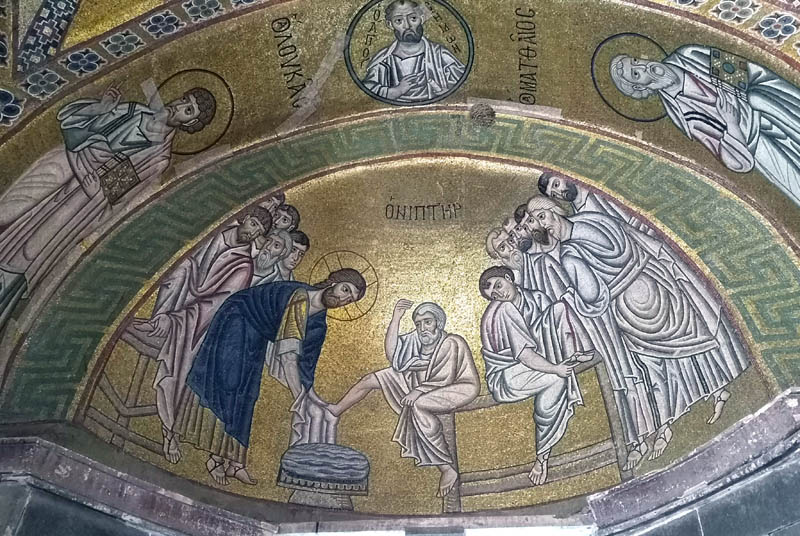
Monastery of Hosios Loukas
It was built in 1011 on the foundations of a church built in 944. The octagonal plan of the church became a major reference for late Byzantine architecture. Within the framework of the Ottoman Empire, Osios Loukas was the place of a great battle, as evidenced by the guns exposed in the building. The holy founder prophesied that the monastery would be alive "until the end of time." From its foundation, a millennium ago, until the present, the monastic life in it has never been interrupted, keeping the religious heritage alive: the rich Greco-Orthodox liturgy with the wonderful Byzantine songs. The surrounding landscape is of great beauty, dominating extensive olive groves, carefully cared for. The monastic community produces one of the best organic olive oils in the Mediterranean.
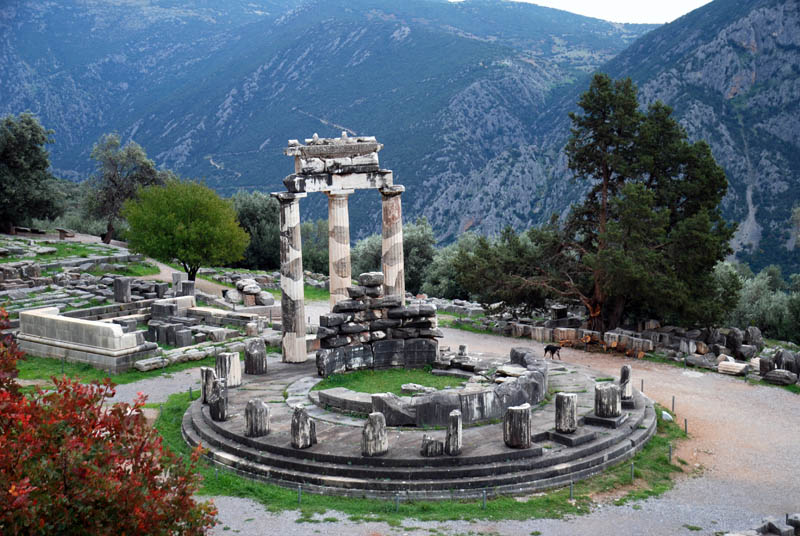
Tholos of Delphi
(in 37 Km.) Delphi: On our way to Meteora we stop at Delphi, which although we previously knew about its tourist interest, surprised us positively and it was one of the places we liked most about our trip through Greece, especially because of the environment in which it is located. We arrived in Delphi from Arachova, so the first part we found of the complex is the sanctuary of Athena Pronea, which was located on the southern slopes of Mount Parnassus, southeast of the sanctuary of Apollo. In this area, where was the Temple of Athena Pronea, the gymnasium, altars and treasures, stands out the Tholos of Delphi, built in 390 BC. The tholos was constituted by a monopod circular structure of 13.50 meters in diameter, surrounded in its outer part by twenty Doric columns of 17.76 meters high, arranged in a circle. Currently, three exterior columns and part of the architrave are still standing. The tholos is part of the whole Delphi archeological site, listed since 1987 as a World Heritage Site in Greece by UNESCO.
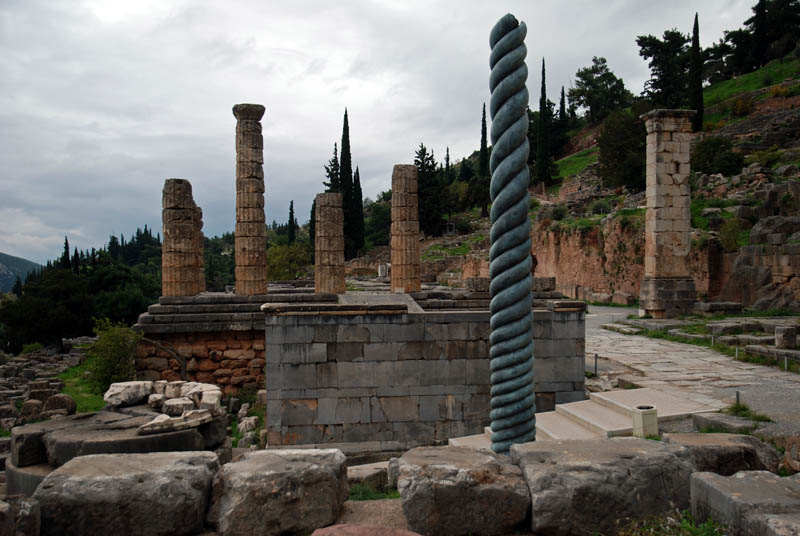
Delphi - Temple of Apollo
In ancient times the sanctuary of Delphi was the place of the oracle of Delphi, inside a temple dedicated to the god Apollo. Delphi was revered throughout the Greek world as the place of the onions or center of the universe. We begin to ascend the hillside of the sanctuary, passing first in front of the different treasures, especially highlighting that of the Athenians, rebuilt in 1906. We continue along the Sacred Way until we reach the Temple of Apollo. The ruins of the Temple of Apollo in Delphi, dating back to the fourth century BC, belong to a Doric temple. Built in Doric style, it had six columns of tuff in the front and fifteen in the sides. He survived until 390, the year in which the Christian emperor, Theodosius I, silenced the oracle with the destruction of the temple and most of the statues and works of art in the name of Christianity.
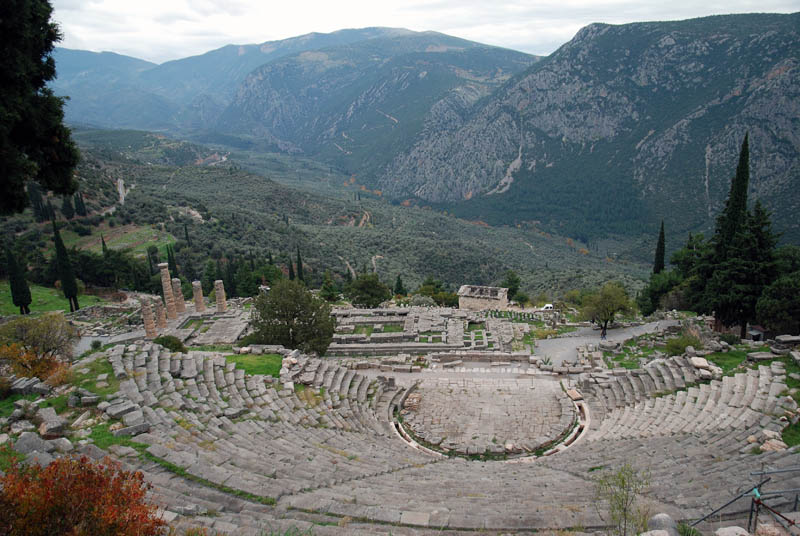
Delphi - Theatre
The ancient theatre at Delphi was built further up the hill from the Temple of Apollo giving spectators a view of the entire sanctuary and the valley below. It was originally built in the 4th century BC but was remodeled on several occasions, particularly in 160/159 B.C. at the expenses of king Eumenes II of Pergamon and in 67 A.D. on the occasion of emperor Nero's visit. The koilon (cavea) leans against the natural slope of the mountain. The koilon was divided horizontally in two zones via a corridor called diazoma. The lower zone had 27 rows of seats and the upper one only 8. The theatre could accommodate about 4,500 spectators. The stadium is located further up the hill, beyond the via sacra and the theatre. It was originally built in the 5th century BC but was altered in later centuries. The last major remodelling took place in the 2nd century AD under the patronage of Herodes Atticus when the stone seating was built and (arched) entrance. It could seat 6500 spectators and the track was 177 metres long and 25.5 metres wide.
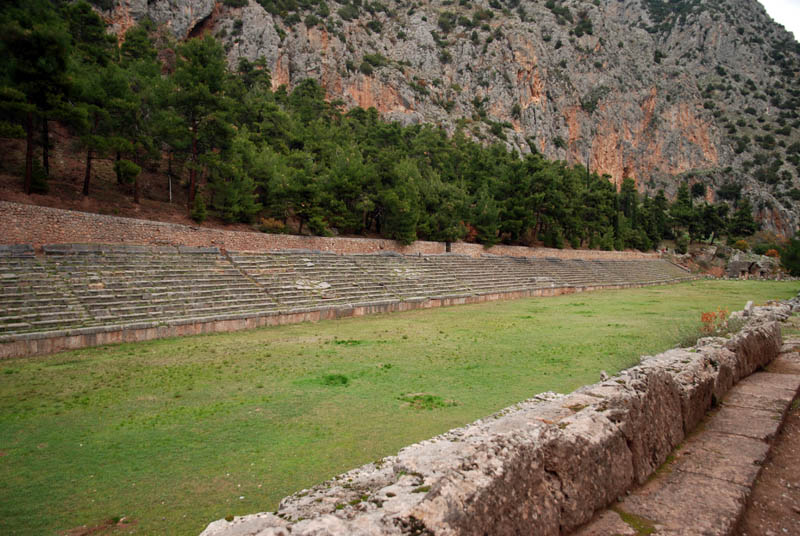
Delphi - Stadium
The entrance ticket to the archaeological site also includes a visit to the Delphi Archaeological Museum. It is a small museum with two floors and 14 rooms that offers works of great interest, such as architectural elements of the treasure - votive chapel - of the city of Sifnos, including the Sphinx of Naxos dating from 575 - 560 BC, the criselefantine head of Artemis (6th century BC), the Ophalo of Delphi and the famous Charioteer of Delphi, a Greek sculpture of 1.80 meters high. It is one of the few original bronze sculptures that are preserved from the Greek world. The group would surely consist of the charioteer who holds the reins of the quadriga, the four or six animals, a warrior behind him, as well as a groom.

Thermopylae - Memorial of Leonidas and Sparta 300
(in 80 Km.) Thermopylae: We go north, on the way to Meteora, with the aim of stopping at Thermopylae, still in the sunlight, to make a rest, but the trip was complicated since the fog accompanies us throughout the journey along the E65 road, and when we arrived it has already got dark and it rains heavily. For that reason we just take a picture of the Leonidas Memorial. Maybe the place is not very interesting, but since we just have to divert five minutes from the highway, we take advantage of the excuse of taking a break to see the statue of the Spartan general, who died with his 300 men in the famous battle against the Persians, in the pass of Thermopylae, in 480 BC.
(in 161 Km.) Meteora: We sleep in the cozy Spartacus House, in the town of Kastraki, from which we have views of the Monastery of St. Nicholas of Meteora.